

28 Oct Why Are My Brakes Squeaking? Common Causes and What To Do
1. Worn Out Brake Pads
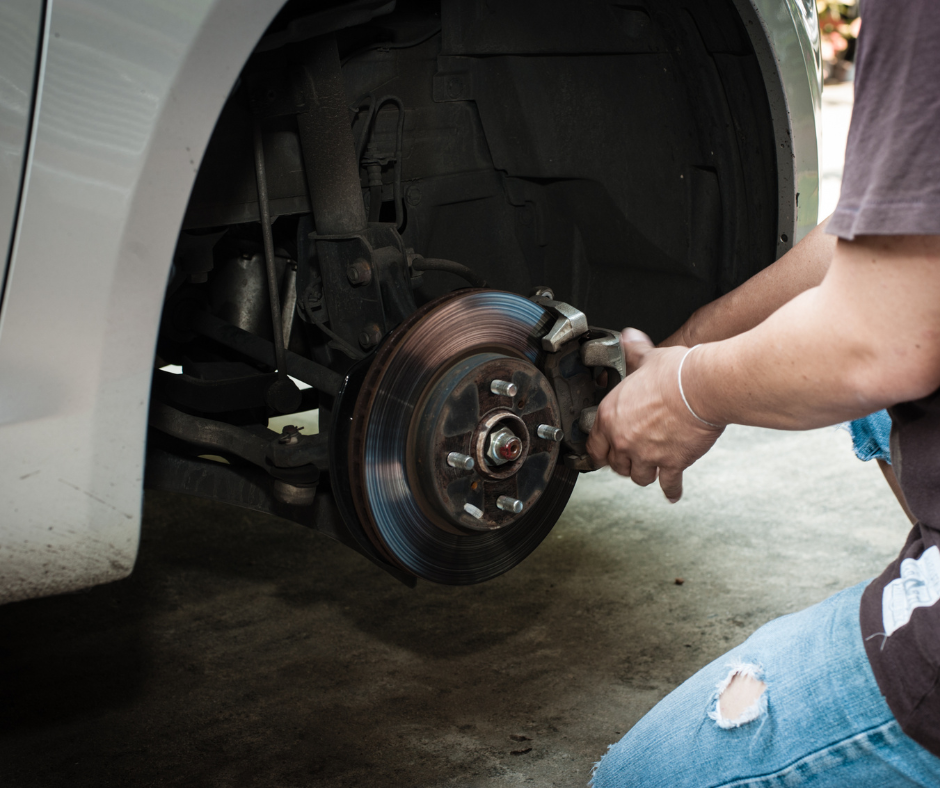
A brake pad is comprised of friction material attached to a steel-backed plate. It slows the vehicle by pressing against a rotor, effectively turning kinetic energy (movement) into thermal energy (heat) via friction.
Continued usage of a brake pad’s friction material gradually wears it away. A brake pad is no longer effective when its friction material wears out, which is why it has a built-in indicator to alert when that has happened. When a brake pad starts screeching, it is telling you it needs replacement.
If you fail to replace worn out brake pads, then you will eventually hear grinding. This noise indicates that your (much more expensive) rotors are now ruined.
2. Dusty Brake Pads
A thin layer of dust on the brake pads may produce squeaking noises while friction burns it away. The noise should subside after a few brake applications.
Mud, dirt, and other particulate road debris can also accumulate on brake pads (as well as the underlying rotors), causing them to squeak as a result. If a few brake applications don’t remove them, then sanding or appropriate cleaning product should quickly resolve the issue.
3. Moisture on Brakes
A brake pad may squeak and squeal as it presses against a rotor’s newly coarsened surface. Fortunately, a few brake applications should once again prove sufficient to solve the problem.
4. Glazing on Brake Pads
Repeated forceful braking can generate excessive friction between the rotor and the brake pad, causing the latter’s surface to become hard and smooth. Once it is “glazed,” a brake pad begins squeaking. It also ceases to function correctly, and will eventually break altogether.
A brake pad may also glaze if it often makes prolonged contact with the rotor. For example, motorists who regularly traverse mountainous terrain may frequently ride their brakes while coasting downhill. Alternatively, a broken or faulty brake caliper may keep the brake pad in constant contact with the rotor.
Regardless of its cause, a glazed brake pad needs immediate replacement. If your squeaky brake pad feels smooth or glassy to the touch, bring it to the garage for replacement pronto.
5. Semi-Metallic Brakes
A brake pad’s surface may be made of one of four different materials. These are categorized as ceramic, non-metallic, semi-metallic, and fully metallic (the last of which is normally only found in racecars).
Semi-metallic brake pads (which contain 30-70% metal) are known to squeak when they are still relatively new. In other words, if you own a newer car with semi-metallic brake pads – and it squeaks when you brake – then the problem may ultimately resolve itself.
Want to avoid squeaky semi-metallic brake pads altogether? Non-metallic pads are typically quieter (albeit less reliable, and less durable to boot). Ceramic brake pads are quietest, longest-lasting, and offer the best performance (for the highest price, of course).
6. Unlubricated Drum Brakes
Modern vehicles often have drum brakes on their rear wheels. If these aren’t adequately lubricated, then friction between the shoes and their backing plates may cause audible squeaking. Fortunately, you can eliminate the noise and prevent serious damage as easily as applying brake grease.
Visit any of Square Tire’s locations for a thorough brake inspection, as well as the honest, affordable solution to any brake issue. Contact us today to schedule fast service!